
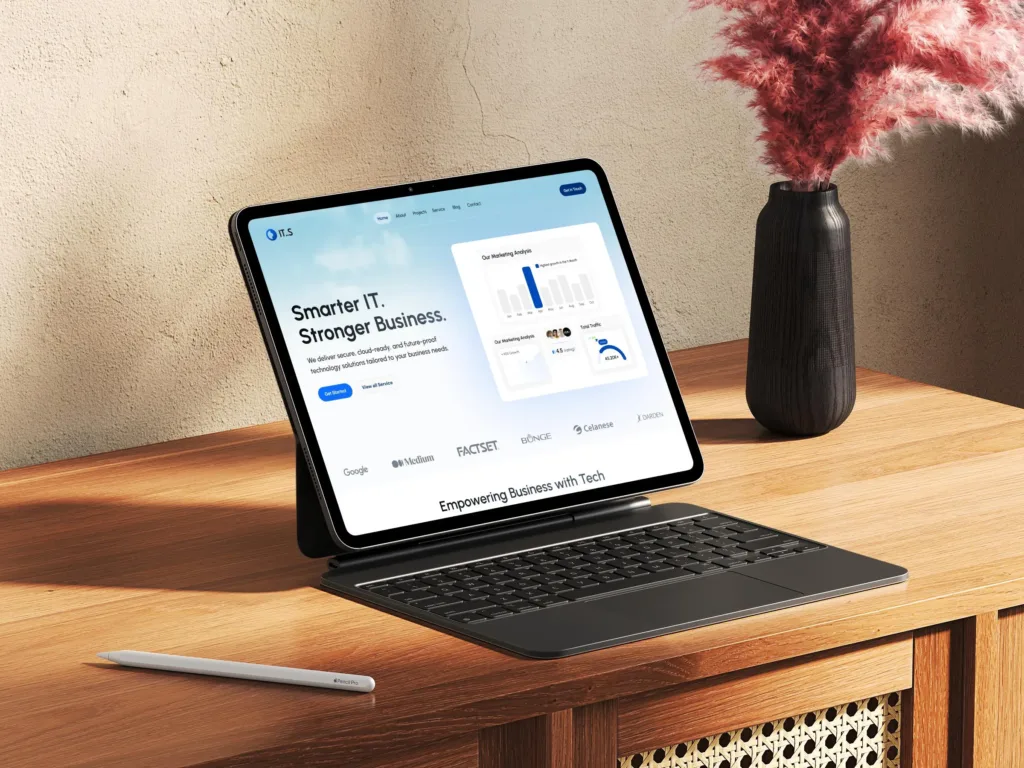
Essential business website features go beyond attractive design and contact information. An effective website should help visitors quickly find what they need, build trust in your company, and take meaningful action. This requires clear navigation, mobile responsiveness, fast loading speeds, security, and convenient communication options. The right features transform a website from a simple online presentation into a tool for attracting customers and supporting sales.
Essential Business Website Features: Where to Start?
Every business has different requirements, but certain elements are important for almost any commercial website. These features should be selected based on customer needs and business objectives.
Essential website elements include:
- A clear homepage and detailed service descriptions.
- Easy navigation and a logical website structure.
- Easily accessible contact information.
- Clear call-to-action buttons.
- Proper functionality on mobile devices.
For example, a service-based business needs a convenient inquiry form, while an online store requires product search, a shopping cart, and checkout functionality.
When developing a business website, it is best to identify the primary action you want visitors to take before planning the necessary features.
Easy Navigation and Clear Website Structure
Visitors should understand what your company offers and where to find relevant information within seconds. Complicated menus, confusing headings, and unnecessary pages make this process more difficult.
What Pages Does a Business Website Need?
Most business websites need a homepage, a services or products section, an About Us page, and a contact page.
Additional sections may include frequently asked questions, a portfolio, or a blog. These are especially useful when potential customers need more information before making a decision.
When planning navigation, use consistent section names and logical connections between pages. This helps visitors explore your website and creates a structure that search engines can understand.
Mobile Responsiveness and Fast Loading Speed
Your website should work comfortably on smartphones, tablets, and desktop computers. Reading content, clicking buttons, and completing forms should remain easy regardless of screen size.
Performance also matters. Large images, unnecessary scripts, and unoptimized code can slow down page loading.
How to Measure Website Performance
Google’s Core Web Vitals include three key metrics: LCP measures loading performance, INP evaluates responsiveness to user interactions, and CLS measures visual stability.
You can use PageSpeed Insights to evaluate your website. However, real user experience matters more than simply achieving a high performance score.
Building Trust and Communicating With Customers
A business website should clearly show who operates the company and how customers can get in touch. Incomplete information or unclear offers can make purchasing decisions more difficult.
To strengthen customer trust, include:
- Accurate company information and contact details.
- Completed projects or examples of previous work.
- Genuine customer testimonials.
- Clear service terms and pricing information.
Contact forms should request only the information necessary to respond to an inquiry. Phone numbers, email addresses, and other communication channels should be easy to find.
Call-to-action buttons such as «Get a Consultation» or «Request a Quote» help visitors understand what to do next.
SEO and Website Accessibility
A business website should have a structure that search engines can understand. Unique page titles, relevant meta descriptions, internal links, and useful content are essential parts of basic optimization.
The Google Search Central SEO Starter Guide explains how to help search engines discover and understand your website’s content.
Digital accessibility is equally important. The W3C WCAG 2.2 guidelines address text contrast, keyboard navigation, and interface accessibility.
These practices support users with different abilities and generally improve the website experience for everyone.
Website Security and Data Protection
A business website needs HTTPS, updated software, and properly configured access permissions. These measures are particularly important when handling customers’ personal information.
Essential security measures include:
- A valid TLS certificate and HTTPS.
- Strong passwords and multi-factor authentication.
- Regular software and plugin updates.
- Website backups and recovery testing.
- Protection of forms and user information.
A privacy policy is also important because it explains what data your business collects and how that information is used.
Security requires ongoing attention after launch. Arranging website technical support can help maintain the website over time.
Additional Features Based on Business Needs
Not every website needs complex functionality. Additional tools should be selected based on how effectively they support customers and business operations.
For example, a service company may benefit from online booking, a pricing calculator, or inquiry forms integrated with a CRM system.
An e-commerce website may require product filters, secure payments, order status tracking, and inventory management.
Website analytics is another valuable tool. It helps identify where visitors come from and how frequently they complete desired actions. These insights can guide future website improvements.
Conclusion
Essential business website features should provide easy navigation, mobile responsiveness, fast performance, security, and effective customer communication. Additional functionality should reflect your specific business objectives.
A good website is more than a place to publish information. It helps customers make decisions and supports business growth. If you are planning a new website or improving an existing one, contact our team to discuss your requirements.
